Foundations Development
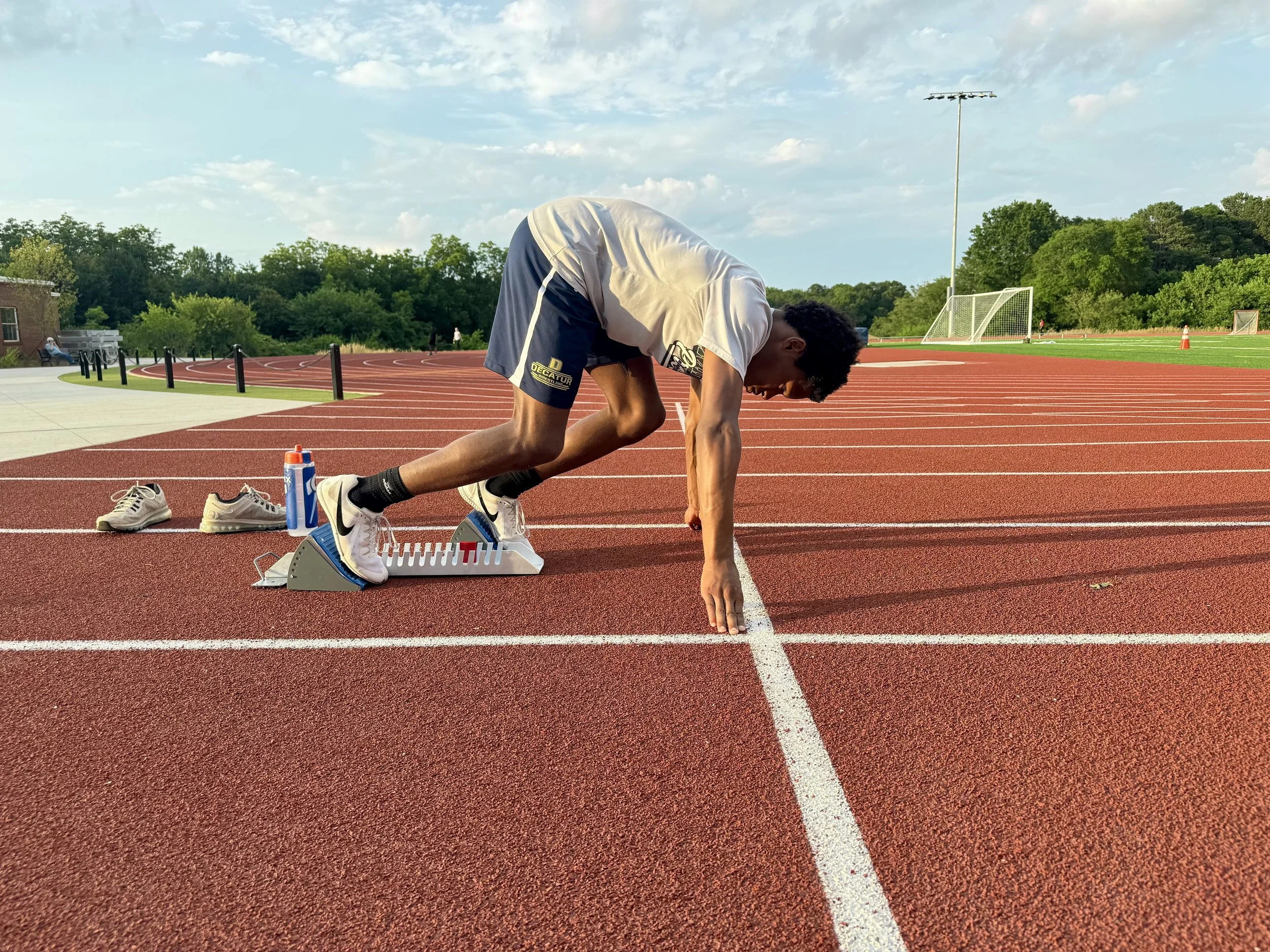
Build the Base for Long-Term Performance
Foundations Development is an entry point for athletes beginning structured speed training within Performance Rx. This program establishes the technical, physical, and nutritional foundations necessary for safe, effective, and sustainable performance progression.
Rather than rushing outcomes, Foundations Development focuses on building readiness—so future training demands can be met with consistency, resilience, and intent.
Who Foundations Development Is For
Foundations Development is designed for competitive athletes who:
Are new to structured speed development or performance-based training
Need to improve sprint mechanics and movement efficiency
Have inconsistent fueling or recovery habits
Are committed to long-term athletic development
This program is not designed for recreational athletes, drop-in training, or short-term fixes.
Program Focus
-
Foundations Development intentionally integrates speed development and performance nutrition to create a stable base for long-term progression.
-
Athletes focus on learning how to move efficiently and apply force effectively. Emphasis is placed on quality, consistency, and progression. Speed development is not the same as conditioning.
Key areas include:
Sprint posture and alignment
Acceleration mechanics
Force application and intent
Movement efficiency and coordination
Training volume and intensity are managed to support learning, adaptation, and injury risk reduction.
-
Nutrition support within Foundations Development focuses on establishing consistent fueling habits that support training, growth, and recovery.
Key areas include:
Daily fueling structure for training and rest days
Macronutrient fundamentals for developing athletes
Hydration and recovery habits
Identification and correction of under-fueling patterns
Education is practical and actionable, designed to create clarity rather than overwhelm.
What Makes Foundations Development Different
Speed and nutrition are integrated and not treated as separate services.
Training decisions are grounded in long-term athlete development principles
Progression is based on readiness, not timelines
Safety, consistency, and execution are prioritized over intensity
This approach protects athletes from doing too much too soon and establishes habits that support higher-level performance work.
Program Structure
Fixed-duration program
Small group, coach-led instruction
Structured progression with clear expectations
Specific scheduling and duration details are provided after placement.
Goals
Demonstrate improved sprint mechanics and movement efficiency
Train with greater consistency and intent
Fuel appropriately to support training demands